
NEUROSCIENCE FOR CHANGE
(FOUNDATION)
A PRACTICAL, EVIDENCE-BASED COURSE FOR LEADERS AND PROFESSIONALS NAVIGATING COMPLEXITY, RESISTANCE, AND CHANGE
NEUROSCIENCE FOR CHANGE
(FOUNDATION)
A practical, evidence-based course for leaders and professionals navigating complexity, resistance, and change

APMG-accredited Neuroscience for Change (Foundation) content

Self-paced online learning, designed to fit around demanding work schedules

Aligned with internationally recognised Neuroscience for Change certification
CHANGE DOESN’T FAIL BECAUSE THE STRATEGY IS
WRONG.
It fails because people are overloaded, uncertain, or under threat — often without anyone realising why.
If you’re responsible for leading or supporting change, you’re expected to:
Make sound decisions under pressure
Guide others through uncertainty and ambiguity
Maintain performance while systems, priorities, and expectations keep shifting
Yet most change approaches focus heavily on process, frameworks, and compliance not on how the human brain actually experiences change.
This gap is where even well-designed initiatives stall.
APMG-accredited Neuroscience for Change (Foundation) content

Self-paced online learning, designed to fit around demanding work schedules
Aligned with internationally recognised Neuroscience for Change certification
CHANGE DOESN’T FAIL BECAUSE THE STRATEGY IS
WRONG.
It fails because people are overloaded, uncertain, or under threat — often without anyone realising why.
If you’re responsible for leading or supporting change, you’re expected to:
Make sound decisions under pressure
Guide others through uncertainty and ambiguity
Maintain performance while systems, priorities, and expectations keep shifting
Yet most change approaches focus heavily on process, frameworks, and compliance not on how the human brain actually experiences change.
This gap is where even well-designed initiatives stall.
NEUROSCIENCE FOR CHANGE (FOUNDATION) ACKNOWLEDGES THE REAL COGNITIVE AND EMOTIONAL DEMANDS PLACED ON PEOPLE DURING CHANGE — AND OFFERS A MORE REALISTIC, SCIENTIFICALLY GROUNDED WAY FORWARD.

NEUROSCIENCE FOR CHANGE (FOUNDATION) ACKNOWLEDGES THE REAL COGNITIVE AND EMOTIONAL DEMANDS PLACED ON PEOPLE DURING CHANGE — AND OFFERS A MORE REALISTIC, SCIENTIFICALLY GROUNDED WAY FORWARD.



Most resistance isn’t defiance or lack of commitment.
It’s a predictable human response to:
Perceived threat, loss, or uncertainty
Cognitive overload and sustained effort
Error, ambiguity, and decision fatigue
Overstimulation in high-pressure environments
Without understanding these responses, leaders often push harder — increasing friction, disengagement, and burnout.
Neuroscience for Change (Foundation) introduces a neuroscience-based framework that explains why resistance occurs and how leaders can respond in ways that:
Reduce friction rather than escalate it
Improve decision-making under pressure
Support sustainable, human-centred change
Rather than asking people to “push through,” this course helps you work with the brain, not against it.
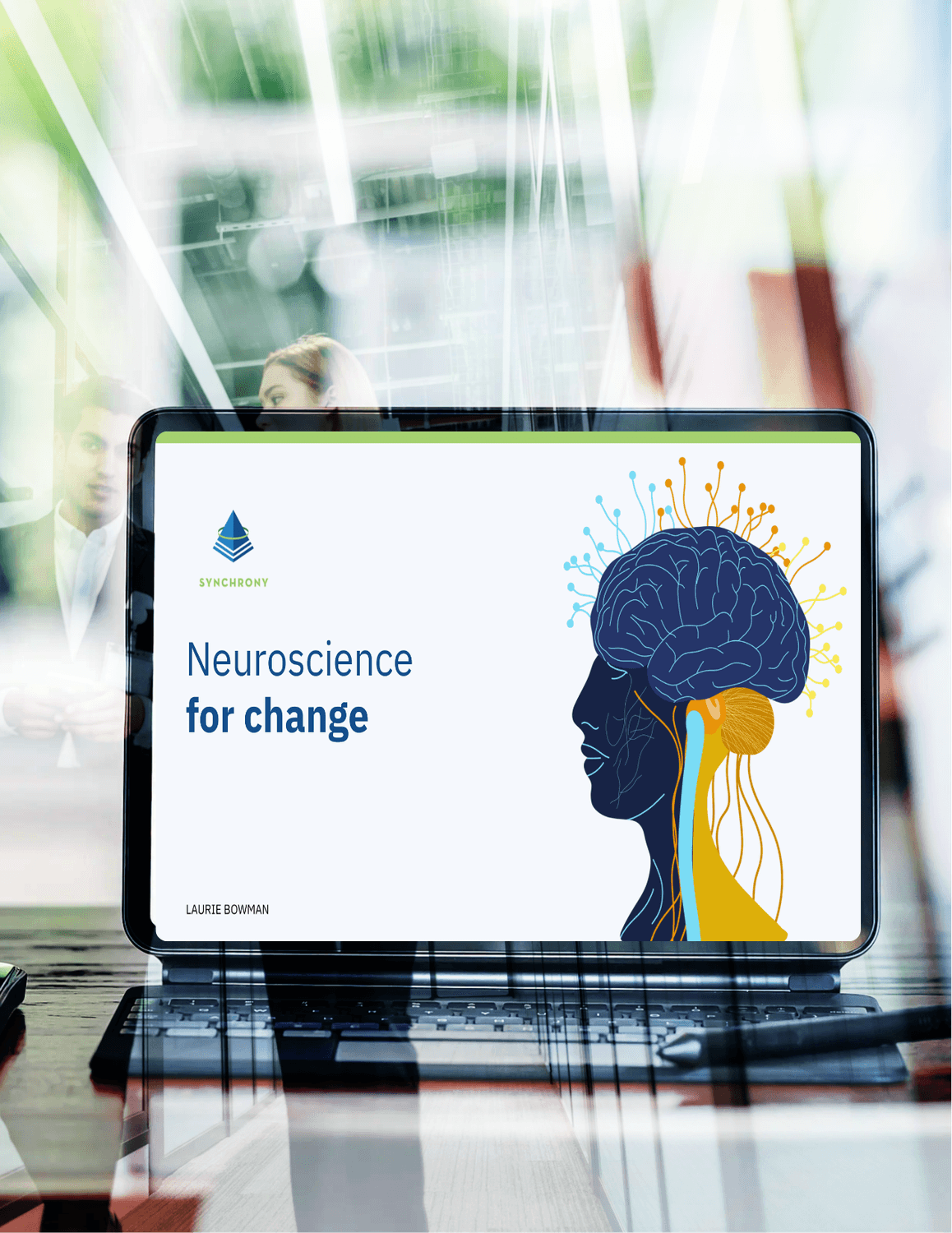
NEUROSCIENCE FOR CHANGE (FOUNDATION)
This course builds professional credibility and gives you practical, neuroscience-informed insight into how people respond to change so you can make better decisions under pressure and lead more effectively in complex environments.
You’ll finish the course with:
a clearer understanding of human behaviour during change
practical ways to design and lead change more effectively
a stronger foundation for leadership and decision-making under uncertainty
IT’S APPLIED NEUROSCIENCE FOR REAL LEADERSHIP CONTEXTS.
NEUROSCIENCE
FOR CHANGE
(FOUNDATION)
This course builds professional credibility and gives you practical, neuroscience-informed insight into how people respond to change so you can make better decisions under pressure and lead more effectively in complex environments.
You’ll finish the course with:
a clearer understanding of human behaviour during change
practical ways to design and lead change more effectively
a stronger foundation for leadership and decision-making under uncertainty
IT’S APPLIED NEUROSCIENCE FOR REAL LEADERSHIP CONTEXTS.
WHAT’S INCLUDED IN YOUR ENROLLMENT
WHAT’S INCLUDED IN YOUR ENROLLMENT

APMG-accredited
Neuroscience for Change (Foundation) content

Self-paced online learning, designed to fit around demanding work schedules

Aligned with internationally recognised Neuroscience for Change certification
Investment: AUD $497
Self-paced online learning, designed to fit around demanding work schedules
Aligned with internationally recognised Neuroscience for Change certification
APMG-accredited
Neuroscience for Change (Foundation) content
Investment: AUD $497
LAURIE BOWMAN
Course Presenter & Facilitator
Laurie Bowman is a risk, assurance, and project professional with extensive experience supporting leaders and organisations through complex change, uncertainty, and decision-making challenges.
His work spans:
large-scale programs and portfolios
governance, assurance, and risk management
leadership development and professional education
This course brings together neuroscience, practical leadership experience, and professional standards to support more effective, human-centred change

LAURIE BOWMAN
Course Presenter & Facilitator
Laurie Bowman is a risk, assurance, and project professional with extensive experience supporting leaders and organisations through complex change, uncertainty, and decision-making challenges.
His work spans:
large-scale programs and portfolios
governance, assurance, and risk management
leadership development and professional education
This course brings together neuroscience, practical leadership experience, and professional standards to support more effective, human-centred change
STAY IN TOUCH
If you want to talk, we are always
available for a conversation.


Brisbane, Australia
FREQUENTLY ASKED QUESTIONS
Leaders, managers, project and change professionals, and governance roles involved in leading or supporting change.
Approximately 7 hours, completed at your own pace.
This is the Foundation-level Neuroscience for Change course aligned with APMG accreditation. Participants may opt to take the certification exam separately following the training.
Yes. The content is globally relevant and suitable for professionals across Asia-Pacific and beyond.
No. The course is professional, evidence-based, and focused on leadership and organisational change.
STAY IN TOUCH
If you want to talk, we are always
available for a conversation.
Brisbane, Australia
FREQUENTLY ASKED QUESTIONS
Leaders, managers, project and change professionals, and governance roles involved in leading or supporting change.
Approximately 7 hours, completed at your own pace.
This is the Foundation-level Neuroscience for Change course aligned with APMG accreditation. Participants may opt to take the certification exam separately following the training.
Yes. The content is globally relevant and suitable for professionals across Asia-Pacific and beyond.
No. The course is professional, evidence-based, and focused on leadership and organisational change.